Harry Parr-Young is a Portuguese–British, award-winning designer with a background spanning in industrial design, architecture, and craft-based research. After graduating from the National School of Furniture in the UK, he was selected by Tent Selects London as part of a new generation of designers shaping future design culture. He has collaborated with leading European furniture and lighting brands, and completed his MFA at Konstfack in Stockholm. His practice is driven by material experimentation and a deep interest in craft as both method and knowledge system.

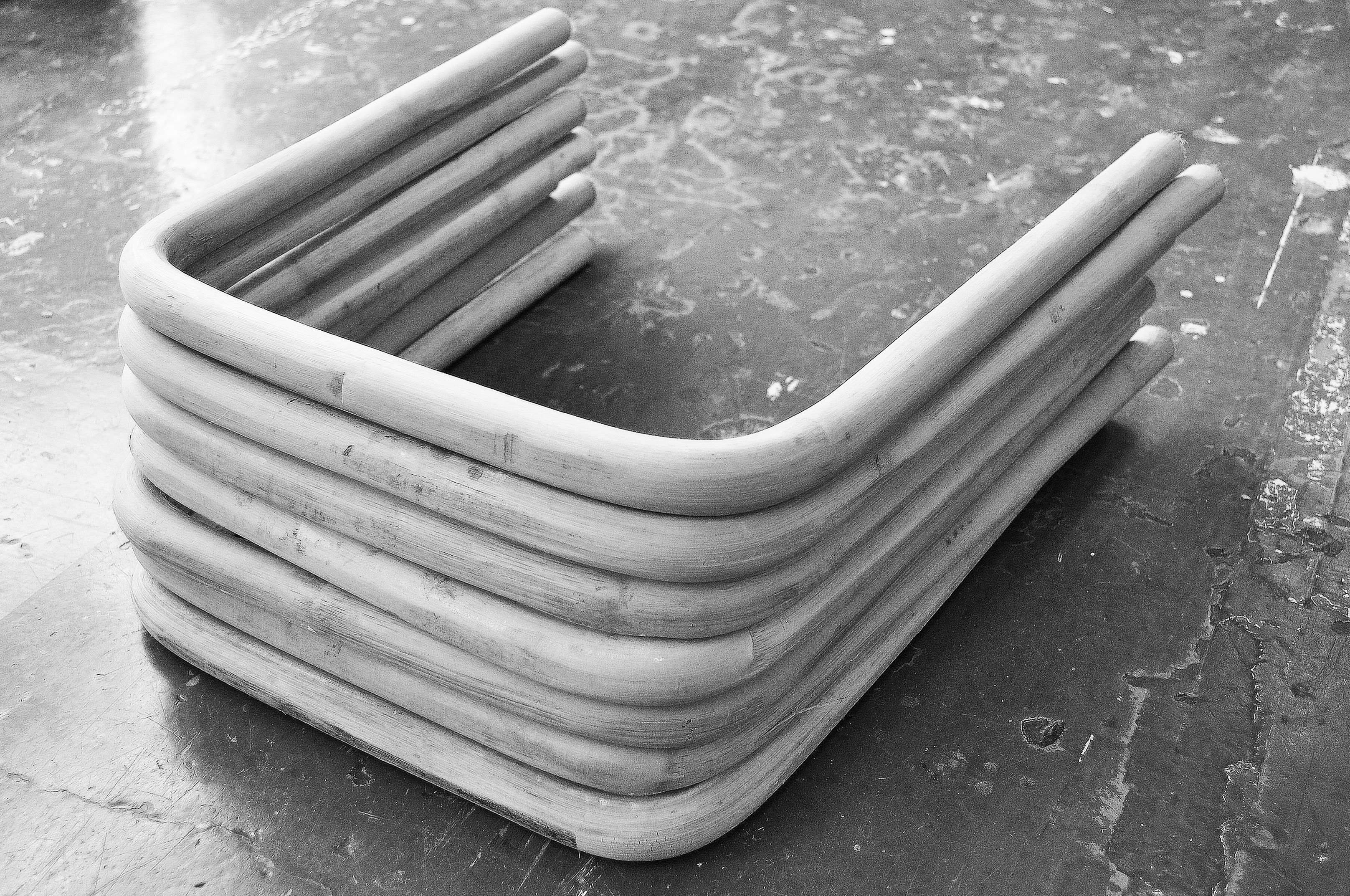
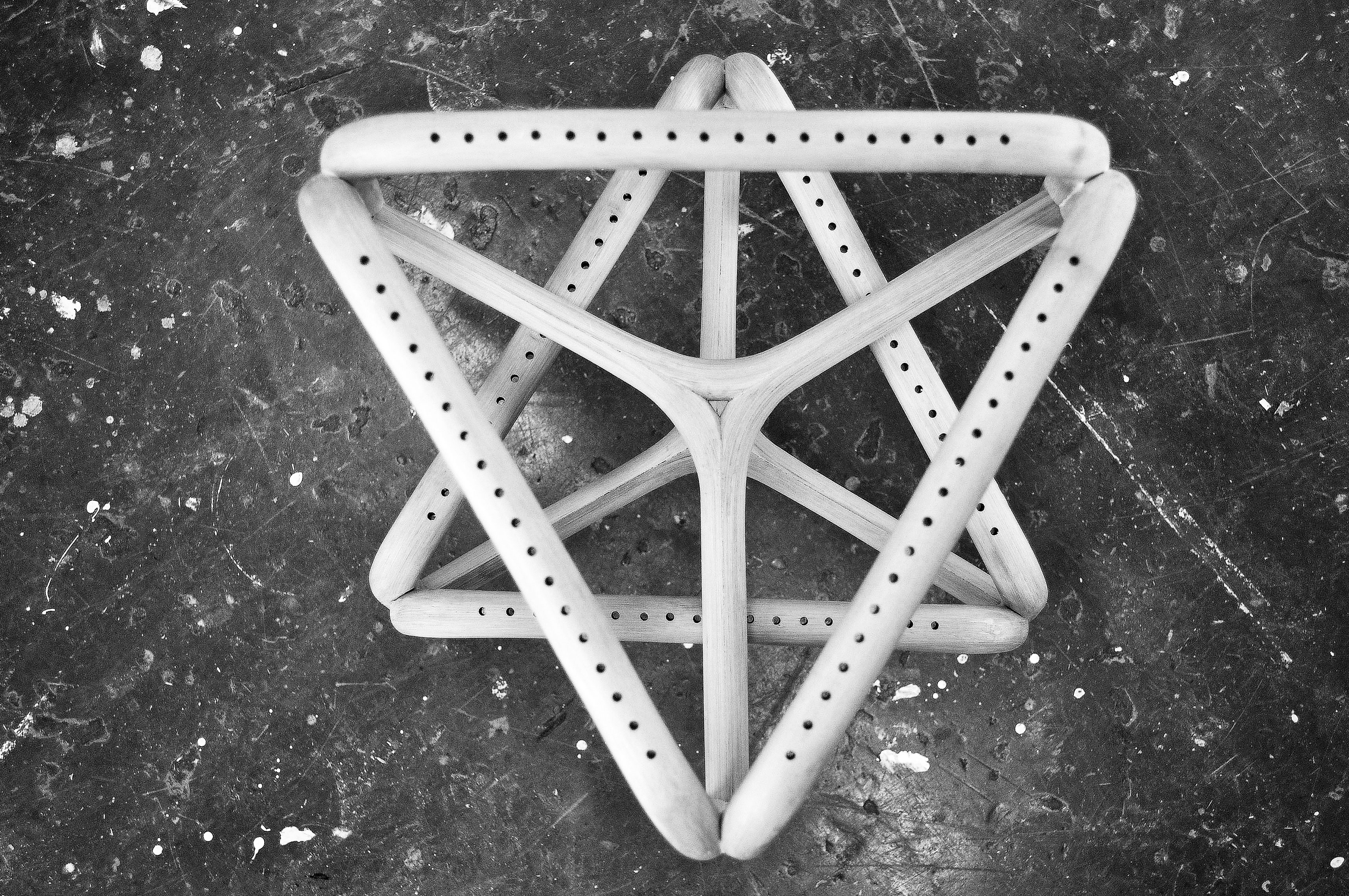
Rattan Splice Stool
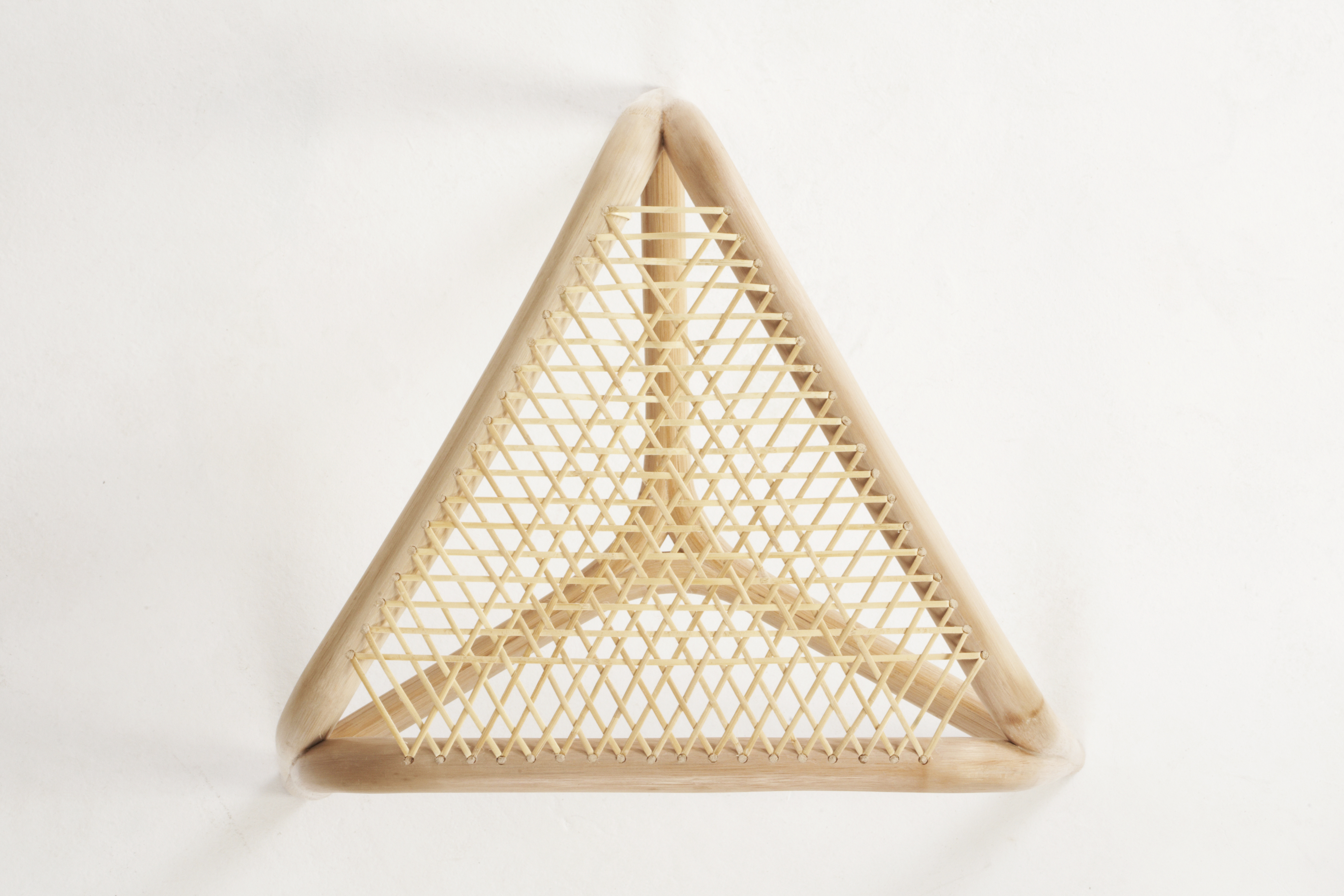
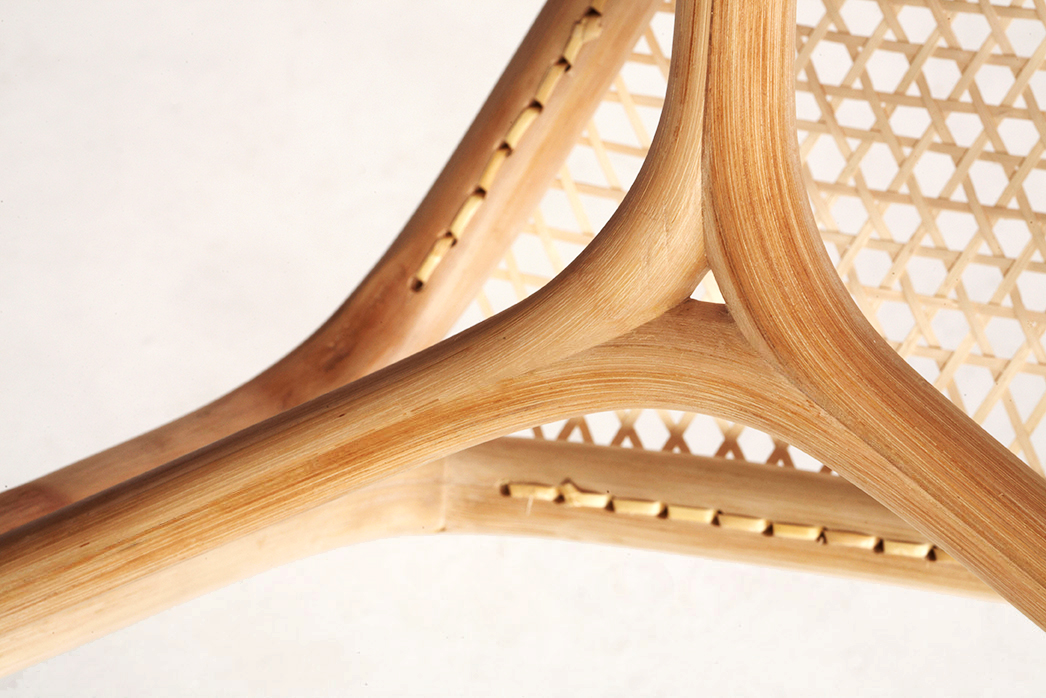
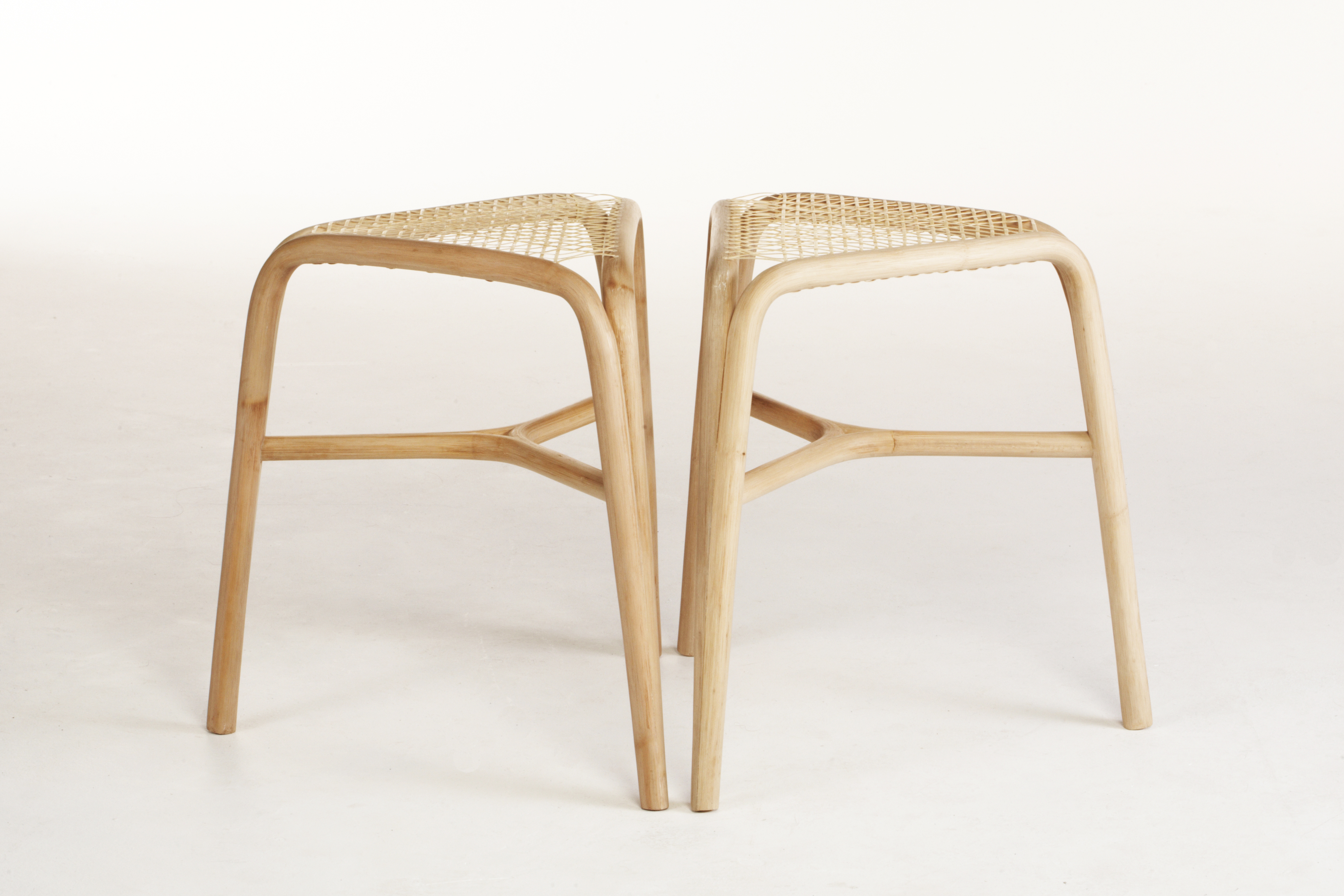
RSM I addresses the conventional style of rattan furniture, re-interpreting the perceived association with its exotic and outdoor context, questioning the colonialist aesthetic language of rattan furniture in western society. The final outcome would be a range of contemporary furniture, proposing a simplified aesthetic by using structural geometry.
2010 / Rattan
RSM I addresses the conventional style of rattan furniture, re-interpreting the perceived association with its exotic and outdoor context, questioning the colonialist aesthetic language of rattan furniture in western society. The final outcome would be a range of contemporary furniture, proposing a simplified aesthetic by using structural geometry.
2010 / Rattan
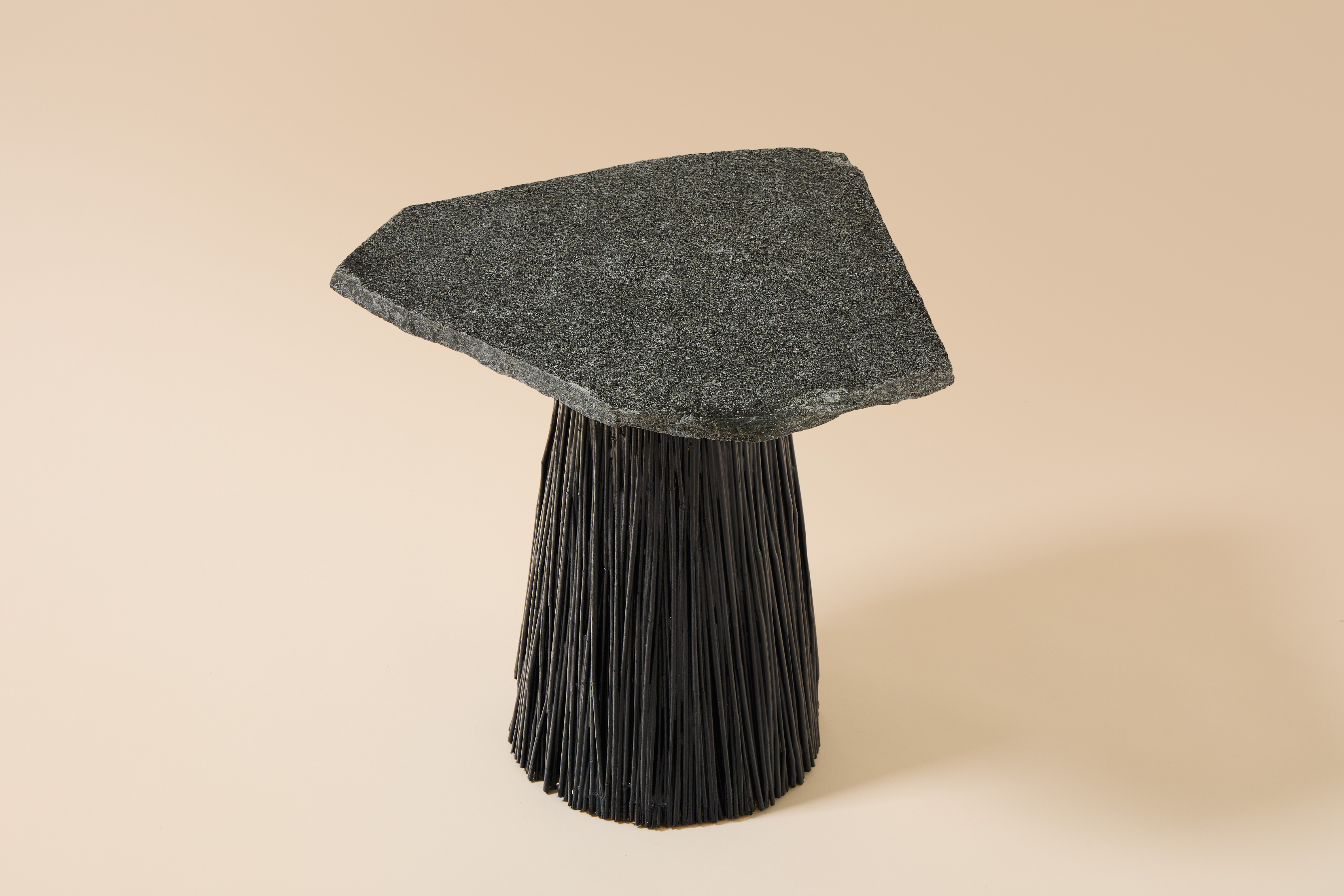

SLATED REEDS
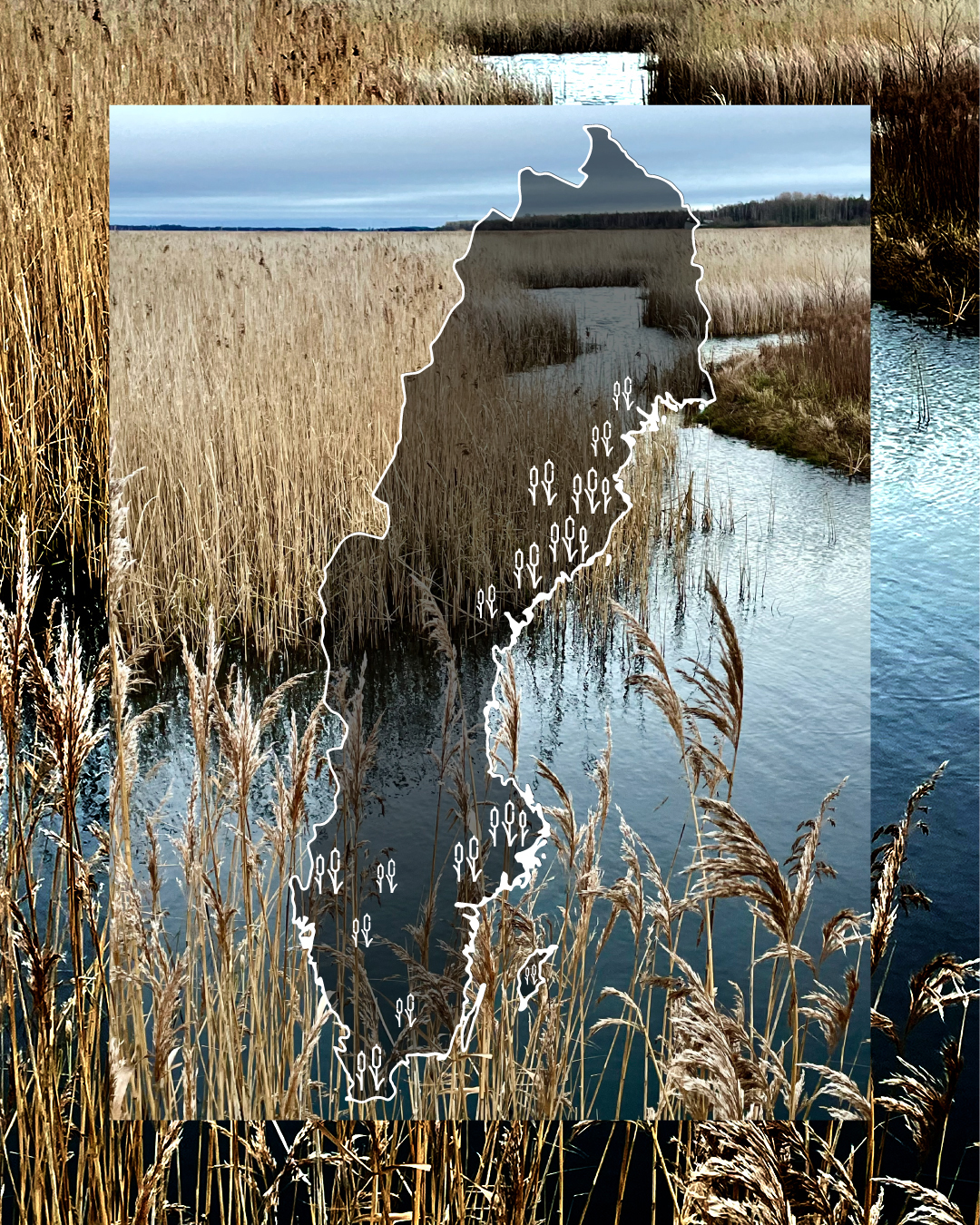
One of the outcomes from a research named “Reading Reeds”, which looks into the design potential of locally harvested reeds, an abundant, sustainable material in Sweden.
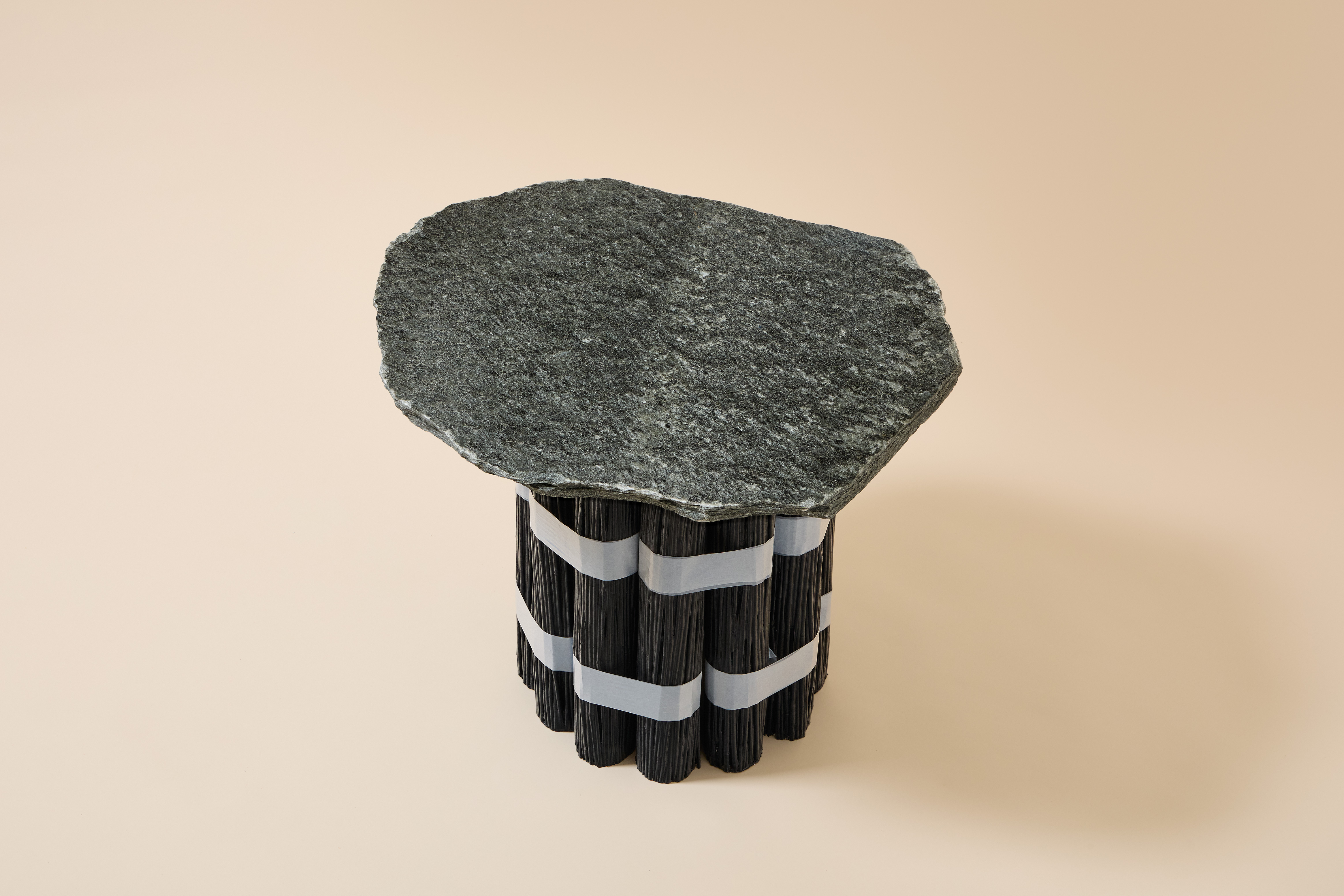
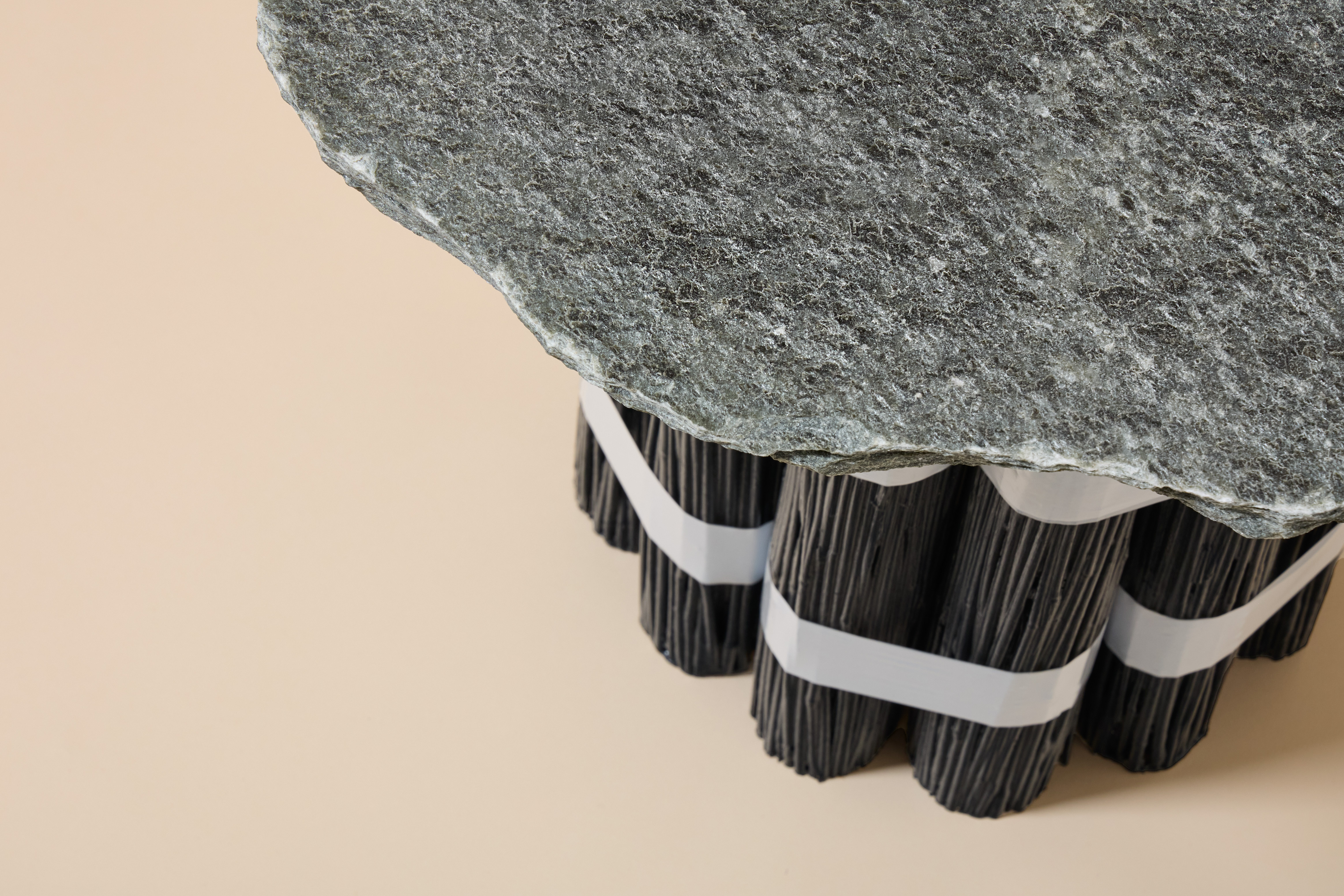
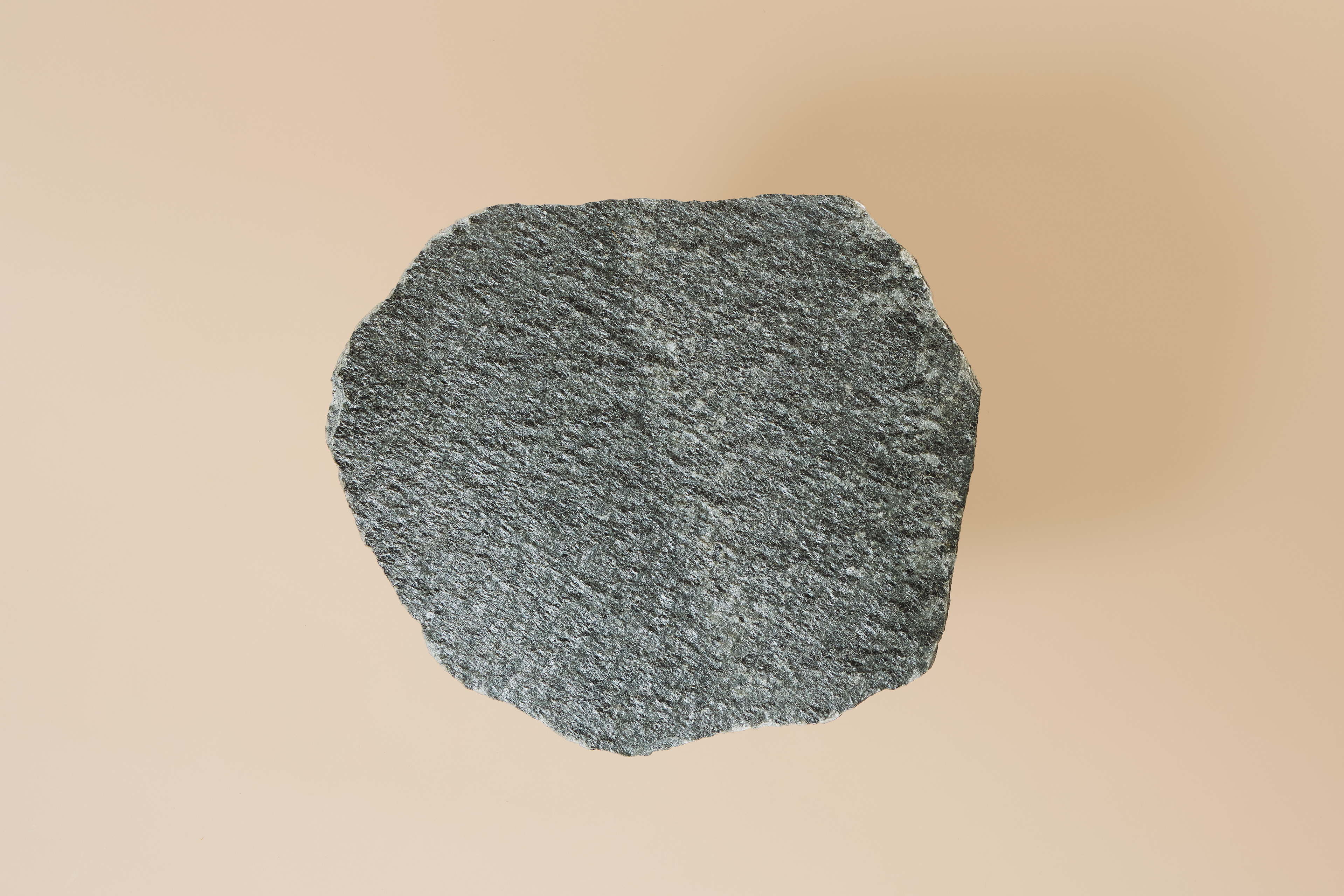
An exploration of unexpected material combinations and finishes, found in Scandinavia. Norwegian slate with Swedish reeds, painted in Falu Rödfärg Svart.
2025 / Painted Reed, Pine wood, Slated
One of the outcomes from a research named “Reading Reeds”, which looks into the design potential of locally harvested reeds, an abundant, sustainable material in Sweden.
An exploration of unexpected material combinations and finishes, found in Scandinavia. Norwegian slate with Swedish reeds, painted in Falu Rödfärg Svart.
2025 / Painted Reed, Pine wood, Slated
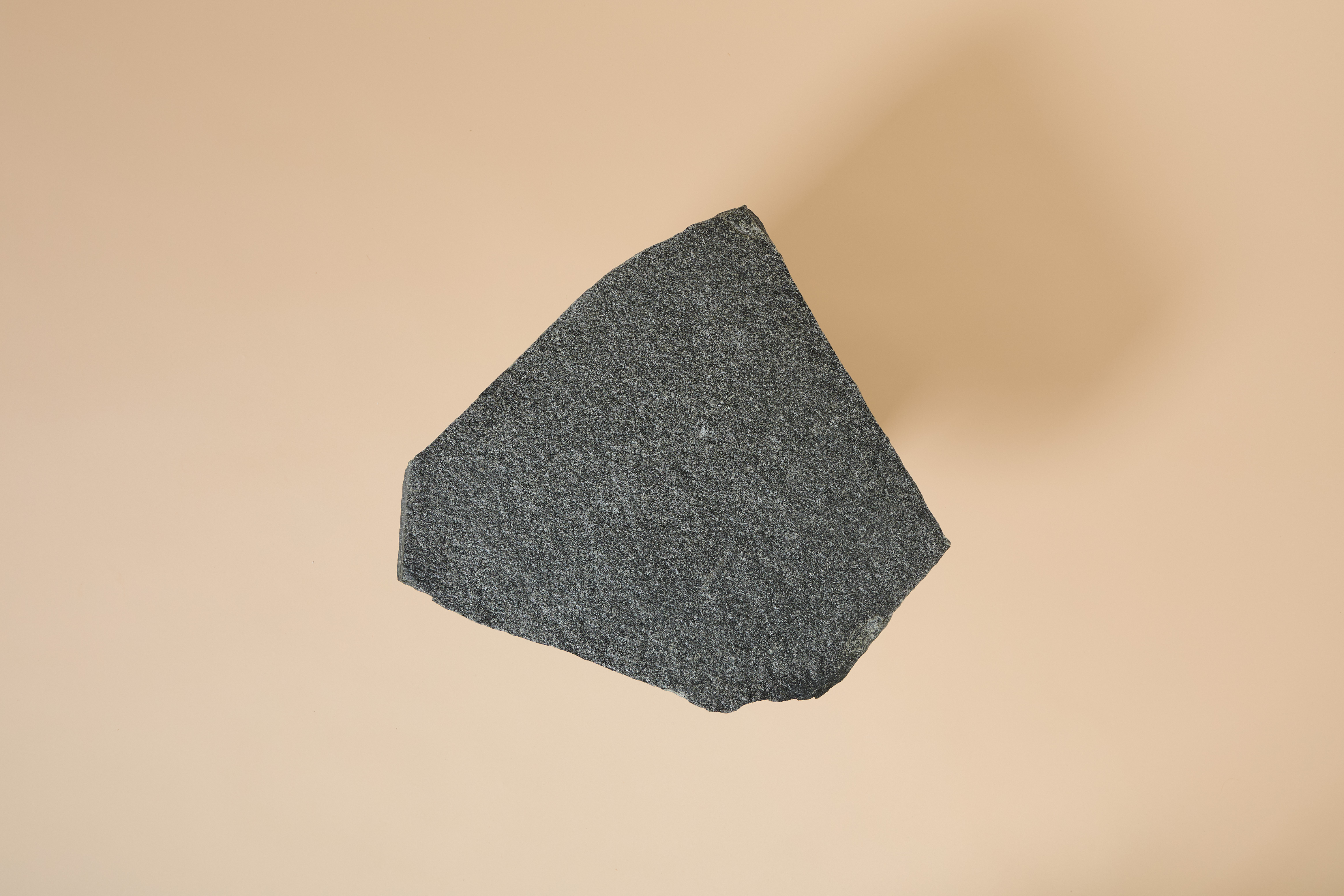
SLATED REEDS
One of the outcomes from a research named “Reading Reeds”, which looks into the design potential of locally harvested reeds, an abundant, sustainable material in Sweden.
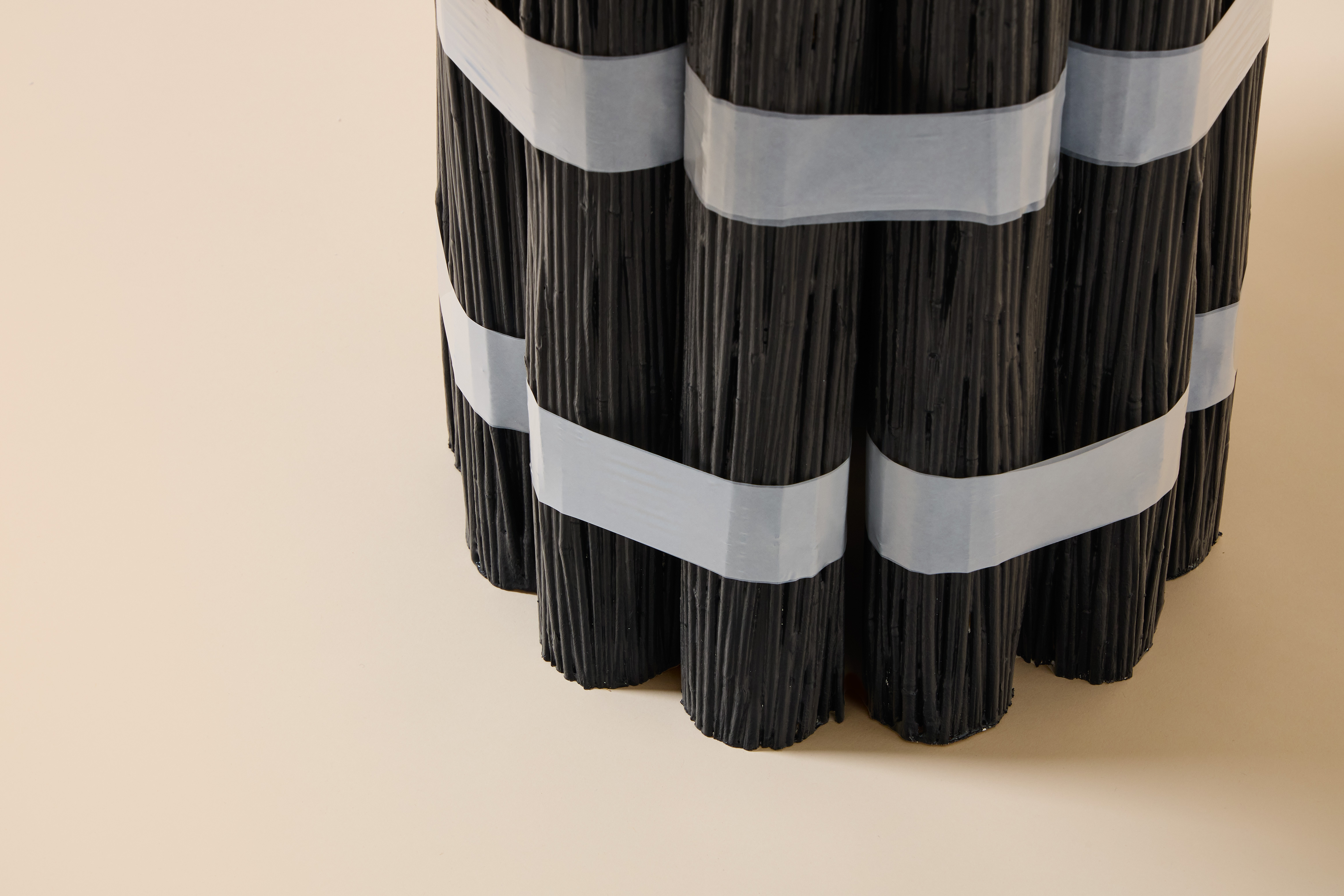
An exploration of unexpected material combinations and finishes, found in Scandinavia. Norwegian slate with Swedish reeds, painted in Falu Rödfärg Svart. The reed columns are woven with compostable bioplastic shrink wrap.
2025 / Painted Reed, Pine wood, Slated
One of the outcomes from a research named “Reading Reeds”, which looks into the design potential of locally harvested reeds, an abundant, sustainable material in Sweden.
An exploration of unexpected material combinations and finishes, found in Scandinavia. Norwegian slate with Swedish reeds, painted in Falu Rödfärg Svart. The reed columns are woven with compostable bioplastic shrink wrap.
2025 / Painted Reed, Pine wood, Slated

Thatched Stool
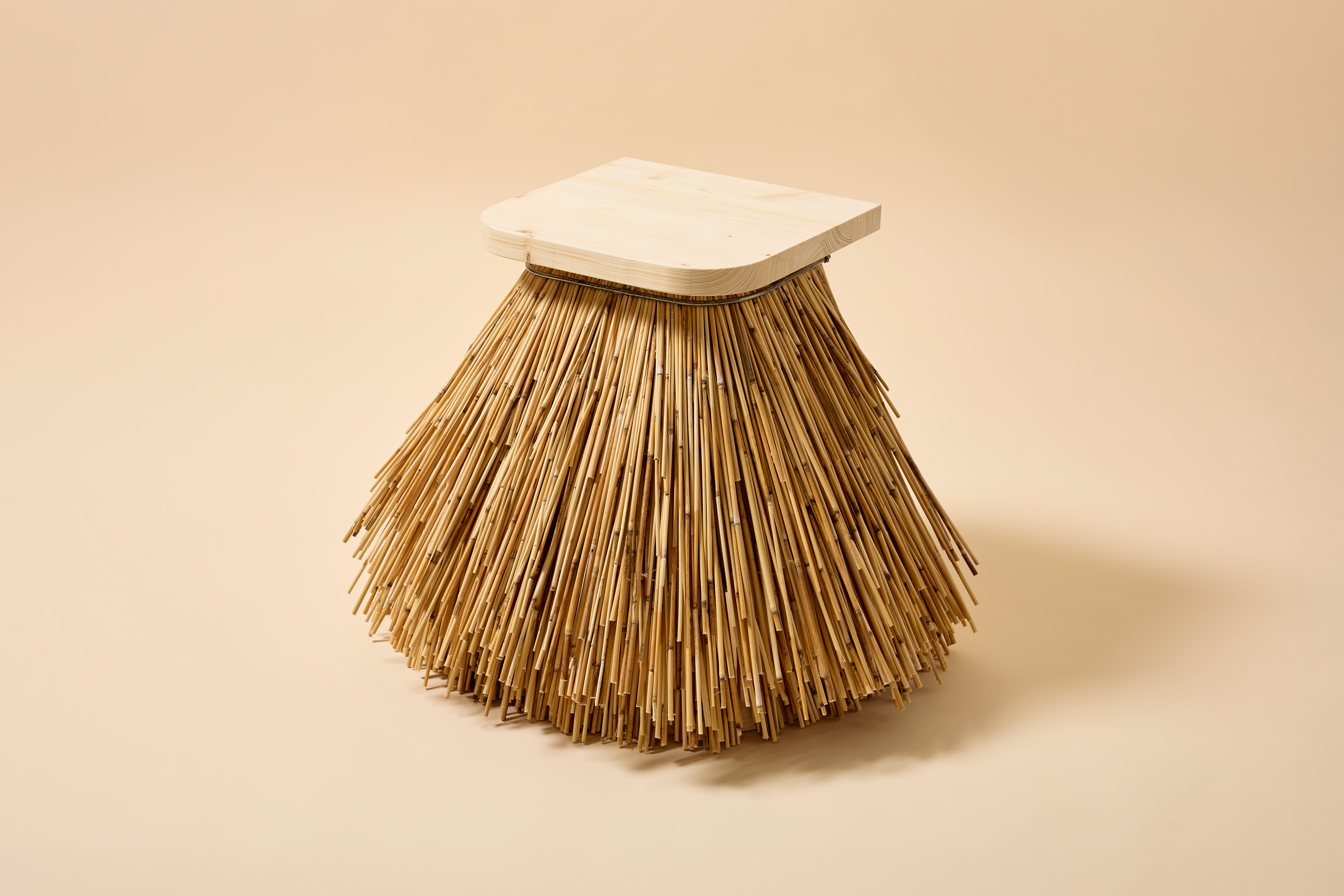
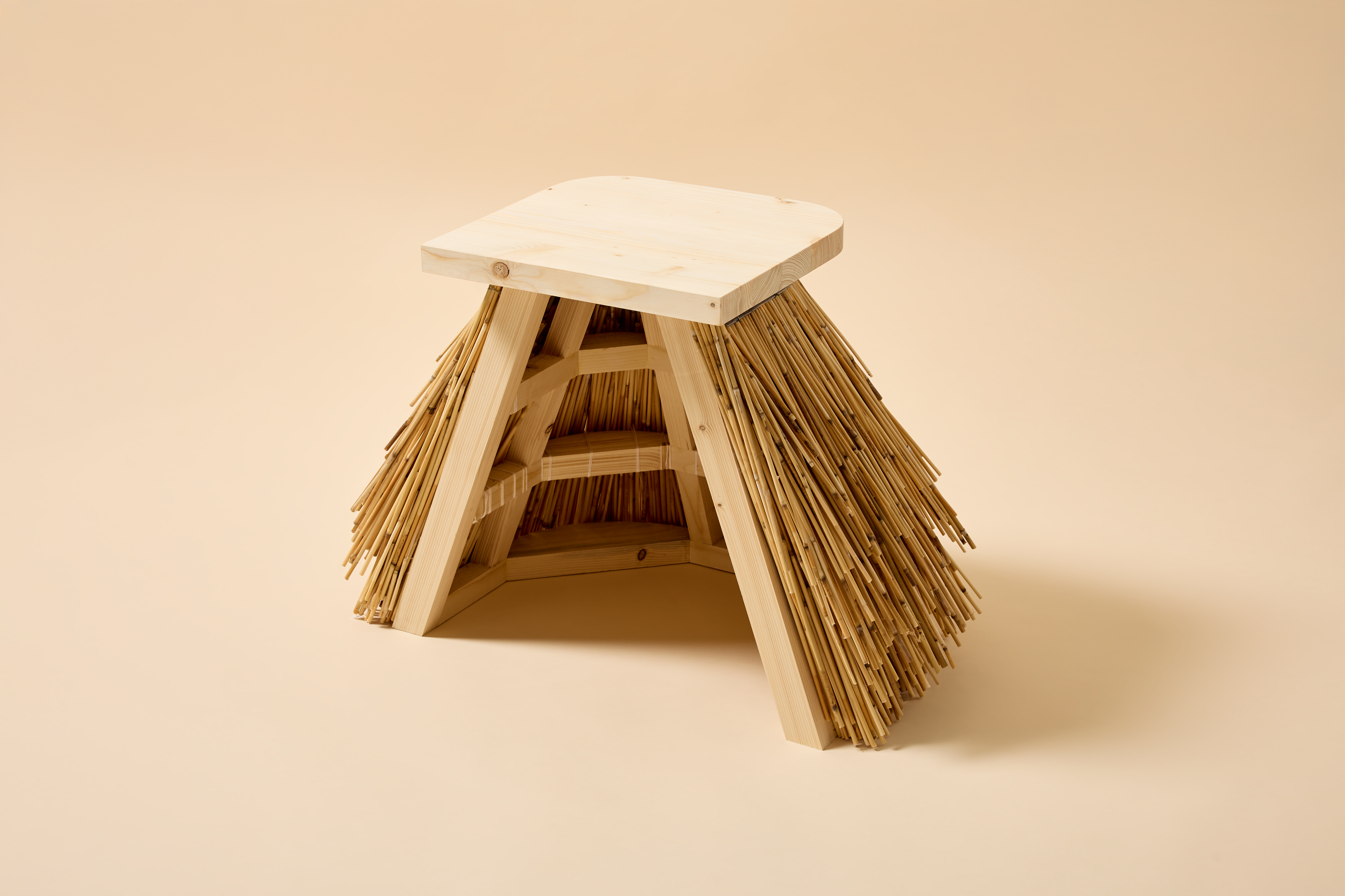
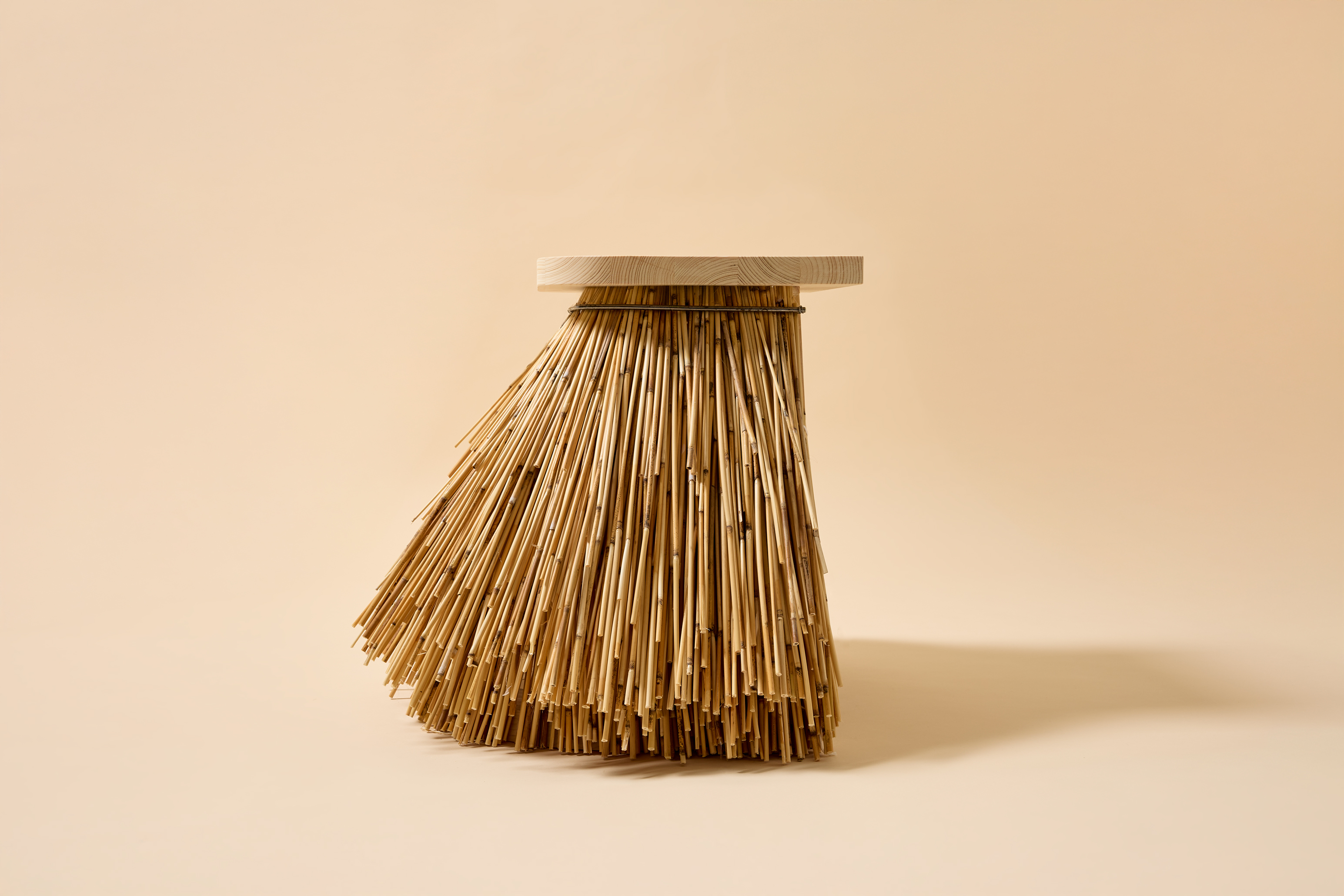
One of the outcomes from a research called “Reading Reeds”, which looks into the design potential of locally harvested reeds, an abundant, sustainable material in Sweden.
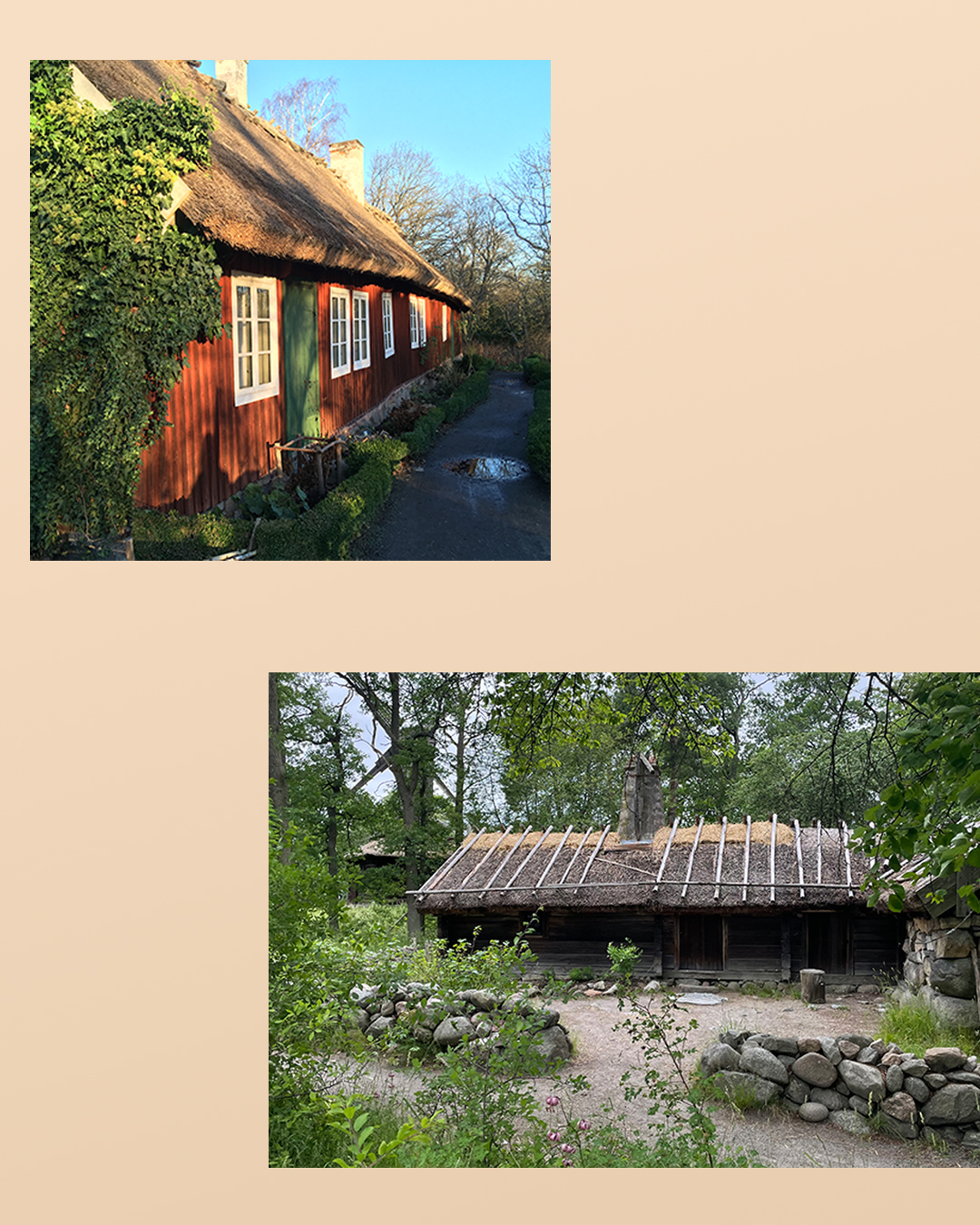
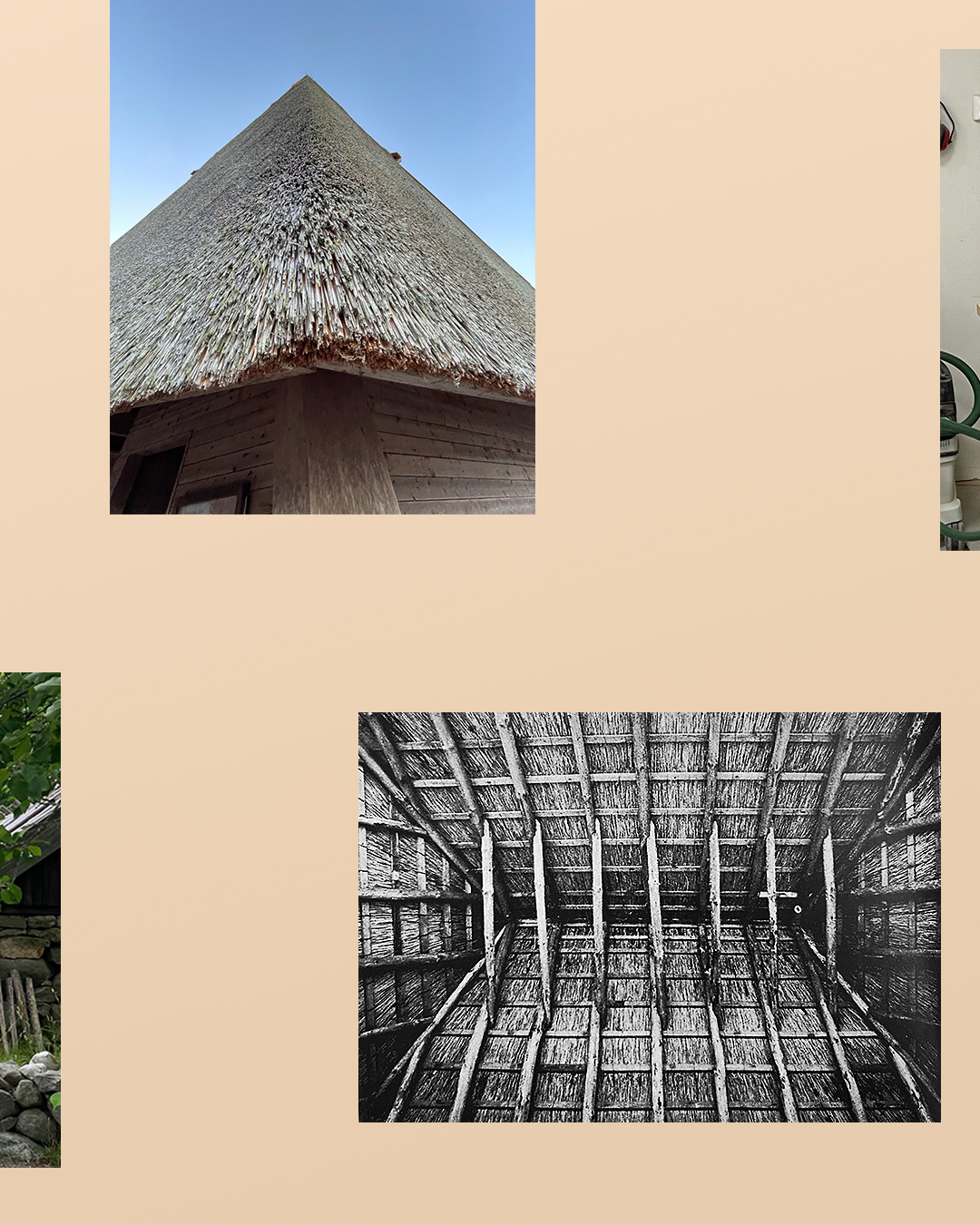
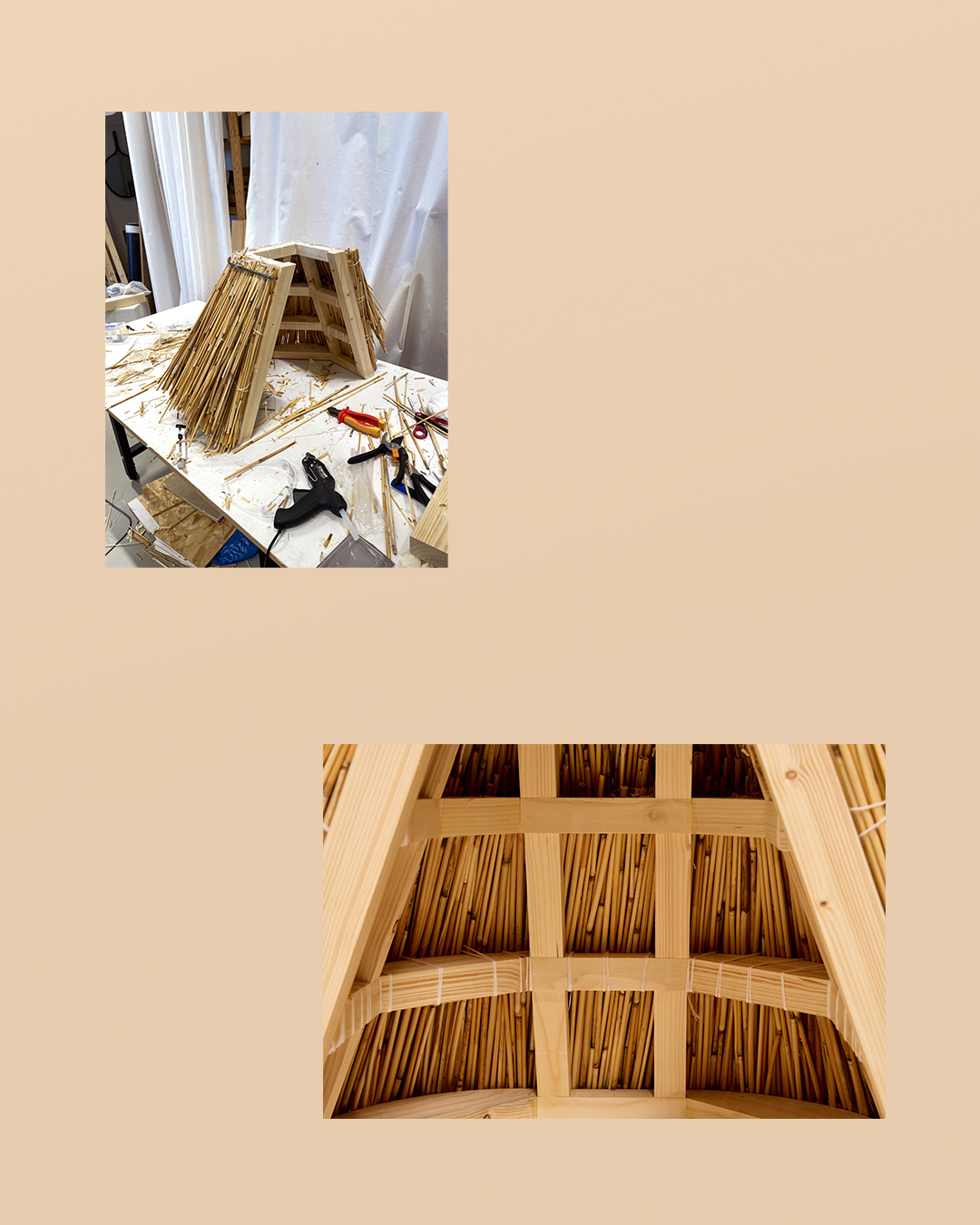
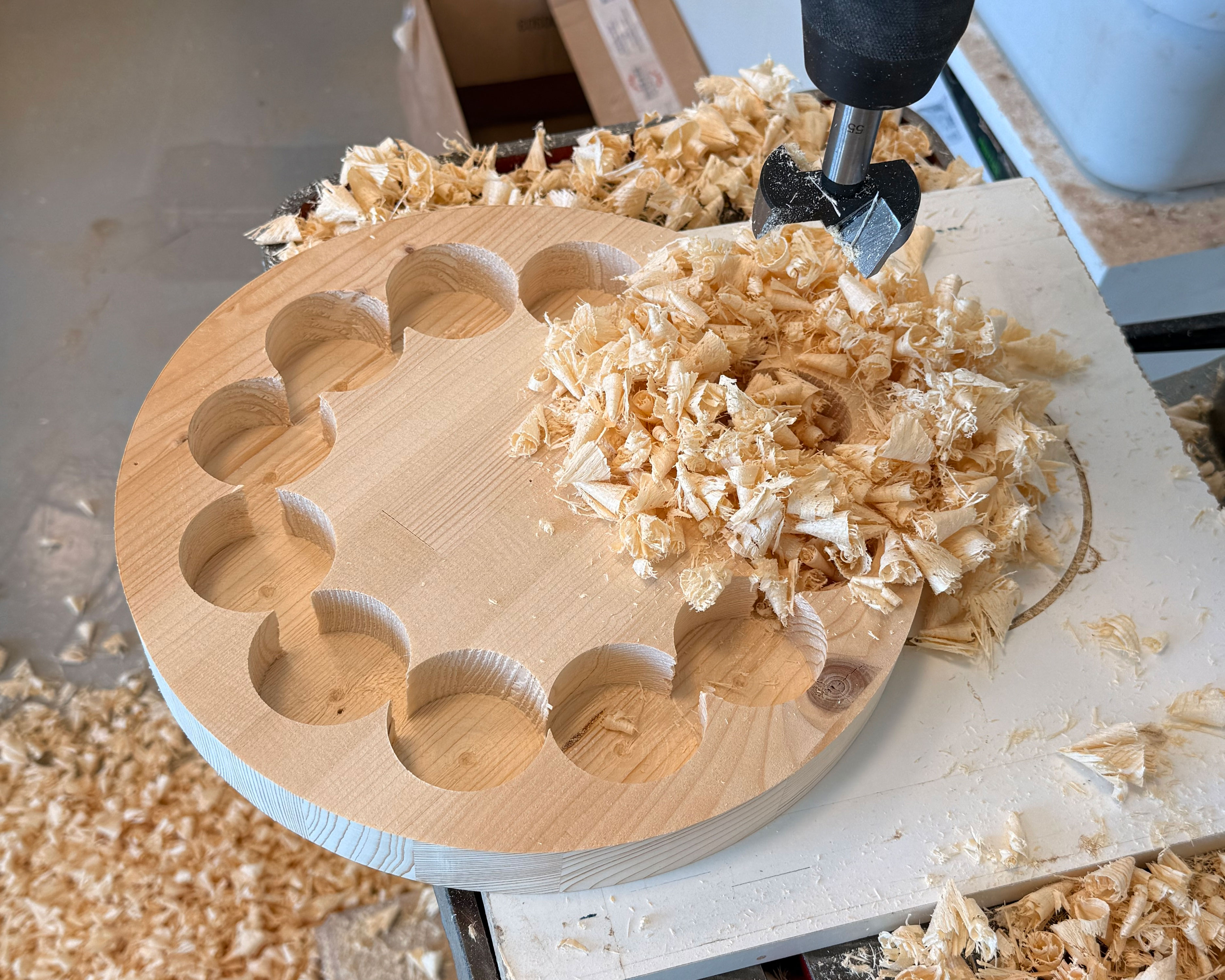
Roof thatching was the source of inspiration, playing with scale and context for a sculptural furniture setting.
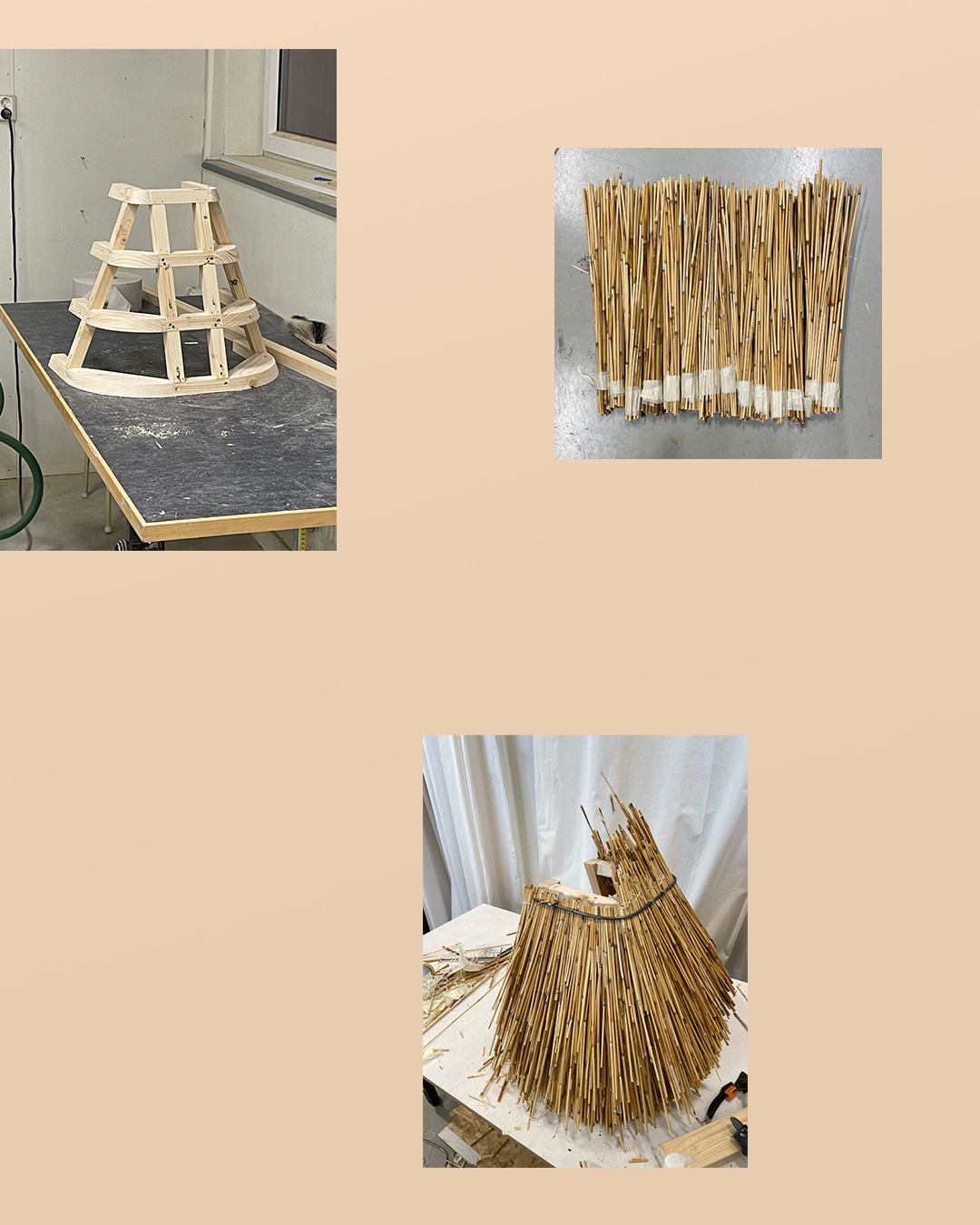
With Reeds being the largest grass in Sweden, naturally overgrowing on lake and coastal areas, interviews were conducted with marine biologists and local actors to understand the harvesting process, its environmental impact and the possible design paths to be taken. Structural forms were created and experimented with, made from reeds using different methods, with some borrowed techniques from other craft practices. The project aims to bring awareness to a dying craft for a new generation, celebrating a local material in Sweden.
2024 / Reeds, Pine, Steel rod
One of the outcomes from a research called “Reading Reeds”, which looks into the design potential of locally harvested reeds, an abundant, sustainable material in Sweden.
Roof thatching was the source of inspiration, playing with scale and context for a sculptural furniture setting.
With Reeds being the largest grass in Sweden, naturally overgrowing on lake and coastal areas, interviews were conducted with marine biologists and local actors to understand the harvesting process, its environmental impact and the possible design paths to be taken. Structural forms were created and experimented with, made from reeds using different methods, with some borrowed techniques from other craft practices. The project aims to bring awareness to a dying craft for a new generation, celebrating a local material in Sweden.
2024 / Reeds, Pine, Steel rod